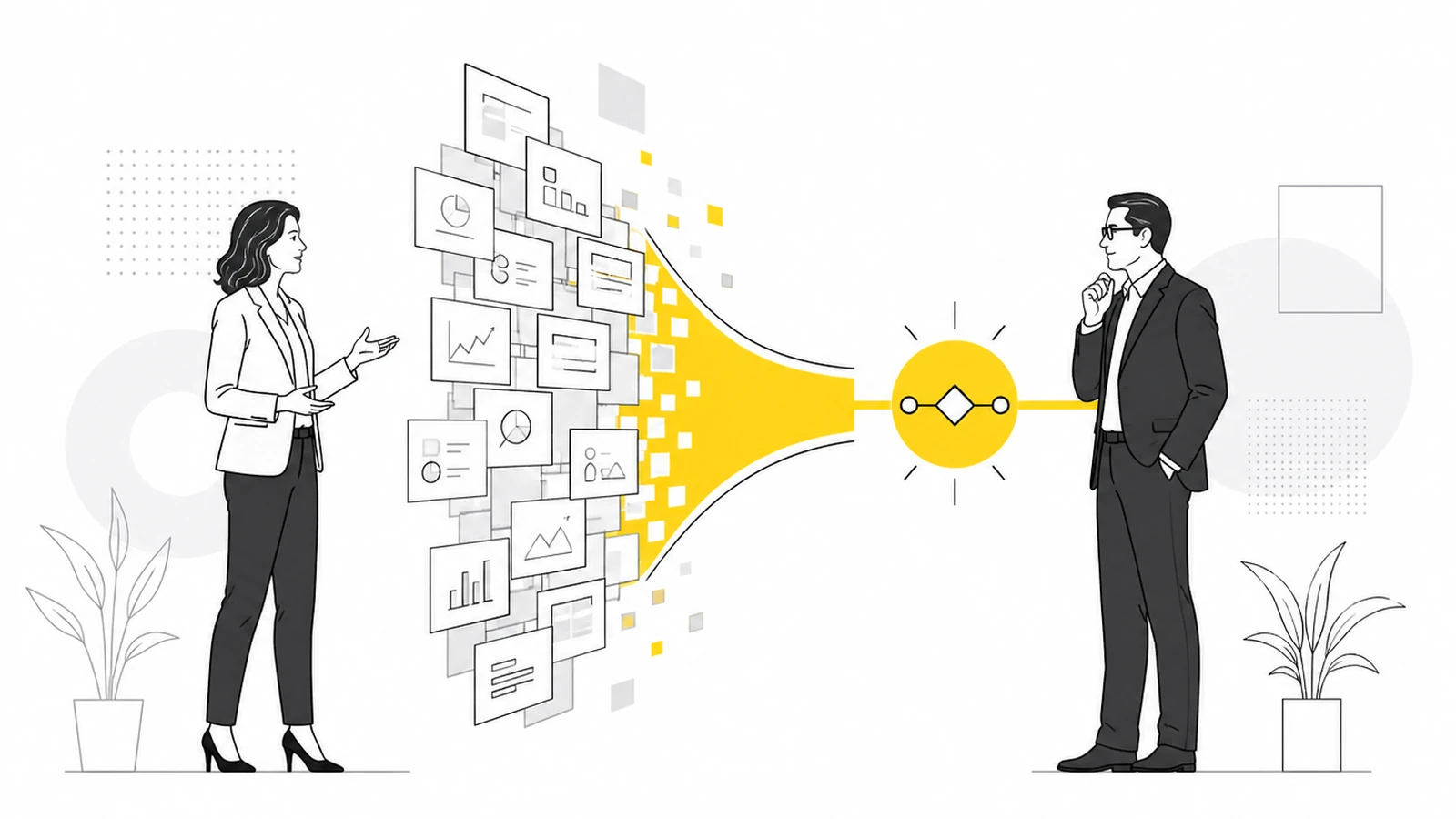
Three experiences compared – sales leadership, B2B business development and presentation design – lead to the same principle: a sales presentation is not there to explain who you are, but to reduce the distance between you and the person in front of you.
- A presentation should reduce distance, not increase it. Every slide that talks about you before talking about the customer builds a barrier.
- Preparation comes before PowerPoint. Those who sell above average do two things: they personalize a lot and they really prepare.
- The best slides prompt questions; they do not provide all the answers. A scenario in which the customer recognizes himself is worth more than forty slides of text.
- Show the transformation, not a list of activities. The customer does not buy what you did. They buy the delta between where they are today and where they could be.
- Design for the room you won’t be in. In B2B the message travels through intermediaries, and no more than ten percent of a presentation remains.
- AI upstream, never downstream. If the presentation is generated by a model, you are sending the customer on a journey that you have never taken.
Twenty minutes, no presentation, one closed deal
I have to present an international training project to a VP of Marketing EMEA. Hundreds of people to train in multiple countries, a communication standard to bring into the organization, the method Lean Presentation Design as the foundation of the program.
I don’t know this person well. And I have a twenty minute slot.
I prepare a five-minute pitch, leaving plenty of room, because I really believe in conversation. Then I read all his latest posts on LinkedIn to understand what tone of voice he uses. I look for videos, because I like to see people talk before meeting them. I want a first feeling before even entering the call.
I join the call. I am ready to present.
The first thing I get asked is how it is to live in Fuerteventura, and what the weather is like in the Canary Islands. Then the diet. Then sport. Nothing to do with presentation design. The conversation is very pleasant and lasts a quarter of an hour, perhaps more.
At some point I wonder how I will fit the pitch in. But interrupting the conversation to force the presentation would be the wrong move.
Then, in the last three minutes, my interlocutor tells me: you wanted to tell me something, give me the key points, so if I like it we’ll talk about it.
I skip the slides. I explain two points. That leads to a follow-up, and the follow-up leads to the project.
I never made the presentation I had prepared. And it worked anyway.
If I closed the deal without presenting, what is a sales presentation really for?
The co-authors of this guide, Massimiliano Bohm and Andrea Monaci
Massimiliano Böhm spent ten years in management consulting and another ten in sales leadership in multinationals, including Emerson and LinkedIn. In 2023 he asked himself what he really knew how to do, the answer was consultancy and sales leadership, and he founded Böhm Consulting, a boutique that helps companies optimize their sales processes.
Andrea G. Monaci comes from the other side of the aisle. He started in research and development, and he tells it like this: a lot of research and little development, fantastic products, the most beautiful in the world, but then they didn’t sell. From there the consultancy, very close to the customer. From consultancy to sales. Today he has his own company that works on sales and artificial intelligence.
Two different paths that arrive at the same point: in B2B you don’t sell to a company, you sell to people. And that’s where their world touches ours.
1. The principle behind successful B2B sales: reduce the distance
If I had to keep just one sentence from the whole conversation, I would keep this one.
The presentation should be used to reduce the distance between you and your prospect, not to increase it.
Massimiliano anticipates the objection: framed that way, it may sound obvious. It is not.
The moment you feel the obligation to say that we were founded in 1963, that we have so many offices and so many employees, you are not reducing anything. You’re building. You are asking your interlocutor to cross a space you created, while the clock is running.
Then there is the worst version of the same mistake, and Massimiliano captures it well: we have all seen salespeople being guided by the presentation, instead of using it to reduce the distance when and where needed.
The sales presentation is one of those assets that you must have in your company. If you don’t have it, you are nobody. But having it is not enough. Using it means deciding in real time which pieces this person needs, at this moment.
Our world and theirs say the same thing with different words. In presentation design we have been repeating for years that the audience is the starting point. In B2B sales it is called a trust relationship. It’s the same idea looked at from two sides.
And it’s not a question of style. Even in B2B, therefore on high-value contracts and strategic decisions, the emotional component is very strong. If I do not like you, or your product does not resonate with me, numbers and ROI will not rescue the conversation. The barrier is already up.
Hence the question to ask yourself every time you open a sales deck.
What role does my presentation play in guiding the subconscious emotional part of my interlocutor?

2. Before opening PowerPoint: fall in love with one thing about your interlocutor
Andrea cited studies on high-performance salespeople, those that compare those who perform above average with everyone else. There are two behaviors that emerge, and they are not the ones you find in sales manuals.
The first is customization. Not generic. The top performers treat each customer as a unique case, and highly personalize both the content and the way of relating. Because every company is truly different. Same industry, similar products, and the process remains unique.
The second is preparation. Very simple to say. Very difficult to do when you have many clients and time is running out. But the math is merciless: the less you prepare, the less likely you are to make a good impression. And that first impression counts for a lot.
Then Andrea told the only thing he remembers about his first serious sales course. The instructor had told everyone: you have to find at least one thing about that person you are crazy about. Not the company. The person.
You have to fall in love with the problems they have, with the relational subtleties of those who make the decisions, with how things work for these people.
This changes the time calculation. If you have half an hour, the twenty minutes spent building rapport are not wasted. They are the part where your interlocutor understands who he is dealing with. And my opening story says exactly this: those eighteen minutes on Fuerteventura were crucial, on both sides.
Andrea was equally clear about the tools. Today you map the right contacts within an organization in a few minutes, you get to a level of detail on each person that previously took days. But then there is a point that cannot be delegated.
For this there is no digital substitute. This is truly a personal commitment, you have to put your mind to it, you have to put your interest into it, you have to be interested in the person you are about to talk to.
The tool gives you the information. Reading it, understanding it, and allowing it to spark curiosity are still your responsibility.
Try this before your next call. Write on a piece of paper something specific and not obvious about the person you are about to meet. Not of the company, of the person. If you can’t write it, you’re not ready. You’re not missing a slide, you’re missing twenty minutes of preparation.
3. Because sometimes the best presentation is the one you don’t give
I make a confession that, coming from someone who gives professional presentations, sounds strange.
In many sales calls I don’t use slides. I always have them ready. But I often open and close a conversation with a client without having introduced one. And we understood each other anyway.
The slides become the follow-up. They become the moment we delve deeper. What they don’t do is replace listening.
I always tell my team at MLC: a sales call is like a presentation. First of all it is a moment of listening. You need to understand what the person talking to you needs, why they’re asking you, and how you can really help them.
You may not be able to help them. In that case, say so immediately and direct the person elsewhere. Business is based on trust and the long term: short-term deals do not go far.
Andrea has the more elegant version of the same idea: there are clients who are so mature that they don’t need your help. Maybe you are very good and can convince them. Then the first time you have to do something together you realize that you are not made for each other. That time was better spent on someone else.
This is why I never enter a call to present. I come in to understand. The slides arrive later, if they are needed, as a structured solution to a problem that we have focused on together at that point.

4. How to actually structure a sales presentation
A five-part flow emerges from the conversation. It’s not a script to follow to the letter: it’s a sequence to adapt as you listen to the customer.
1. The delta: where you are today, where you could be
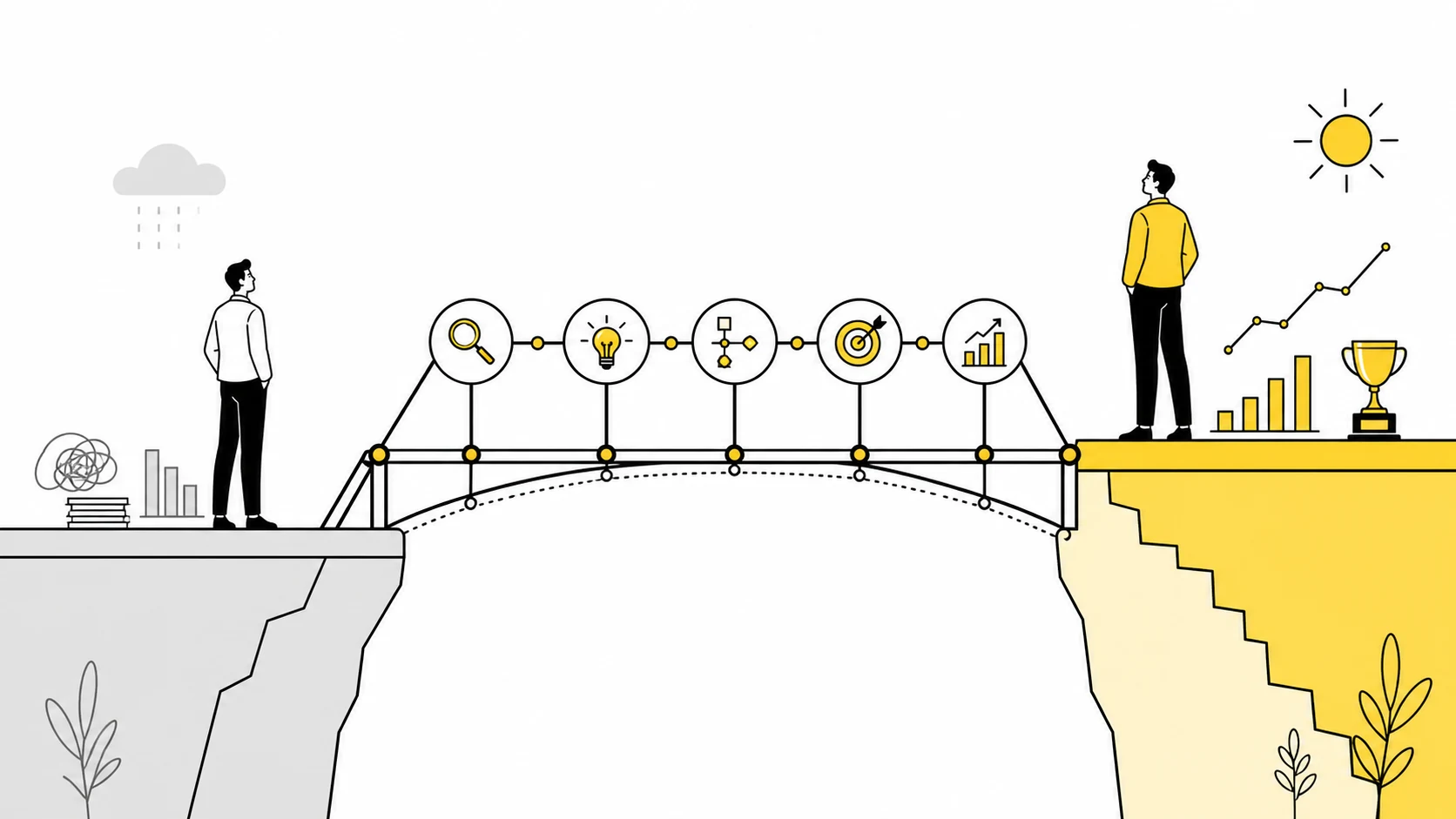
Massimiliano summarizes it in a structure that holds up regardless of what you sell and to whom.
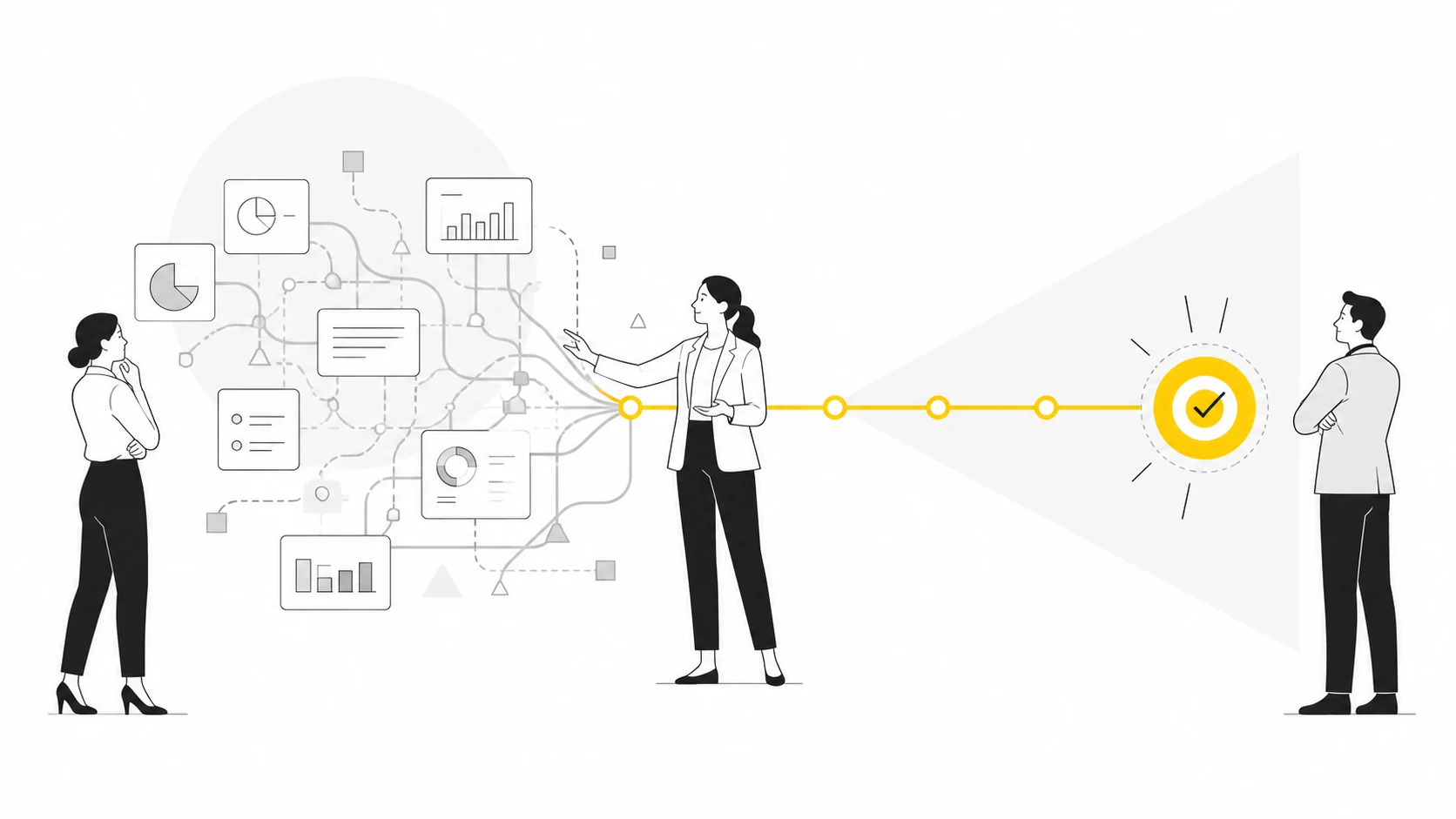
The customer is in one situation today and could be in a better one. Today you are here, you could be there. Between here and there is a delta, and I could be the one to help you fill this delta.
And immediately afterwards comes the reason why it is not enough to say this. It is difficult for customers to imagine where they could be unless they can see it, touch it, and make it their own. The delta must be shown, not told. This is where slides start to matter.
2. Slides that ask questions
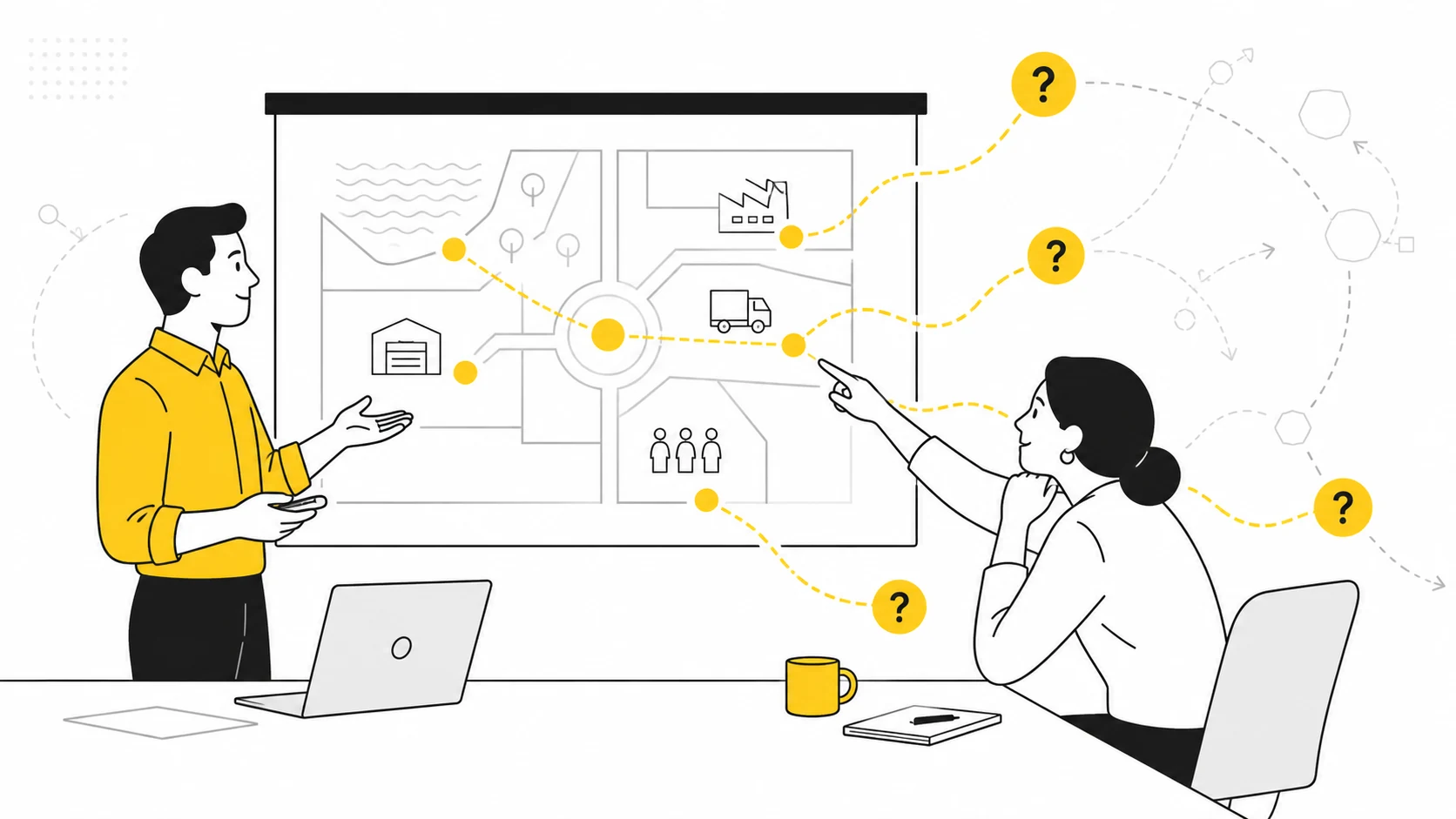
This is the most counterintuitive passage of the entire conversation, and it comes from Andrea.
The slides in a certain sense must also help to ask the questions. When someone comes with slides that say it’s like this, it’s like this, it’s like this, then there’s that concept of increasing distance. This isn’t how it should go.
The format that works is the slide that shows the customer scenario. The layout of a factory. The logistics chain with its critical points. The path inside a retail store with the points where something breaks. An image in which the interlocutor recognizes himself, and which allows him to immerse himself in a situation that he knows better than you.
There are two benefits. That slide allows you to investigate instead of asserting. And while you investigate you are building trust, because the customer thinks: this person understands my situation, asks the right questions, and has grasped my problem.
The presentation is a tool aimed at creating a conversation. Therefore, essential slides, which never say more than what the interlocutor will say to leave him space and enhance the interaction.
It’s the opposite of forty slides of text. Andrea calls it key visual. In our world we have always called it a slide that supports the speaker instead of replacing him.
We often think we have to put everything we can’t say on the slide. It’s the opposite: the slide requires the bare minimum to help the listener understand more quickly and with less effort.
I add a format that I often use: the slide with a number, placed there in a provocative way. We bring your business to this level of efficiency. Where are you today? They may answer: no, we do not work like that. Or they may say: yes, that is exactly right. Either way, the conversation has started.
One thing however makes me shudder: opening by saying ask me lots of questions, because I want lots of questions, and then not receiving any. How much more elegant is it not to say it and spark that conversation with the presentation?
3. Customize the deck “inherited” from marketing
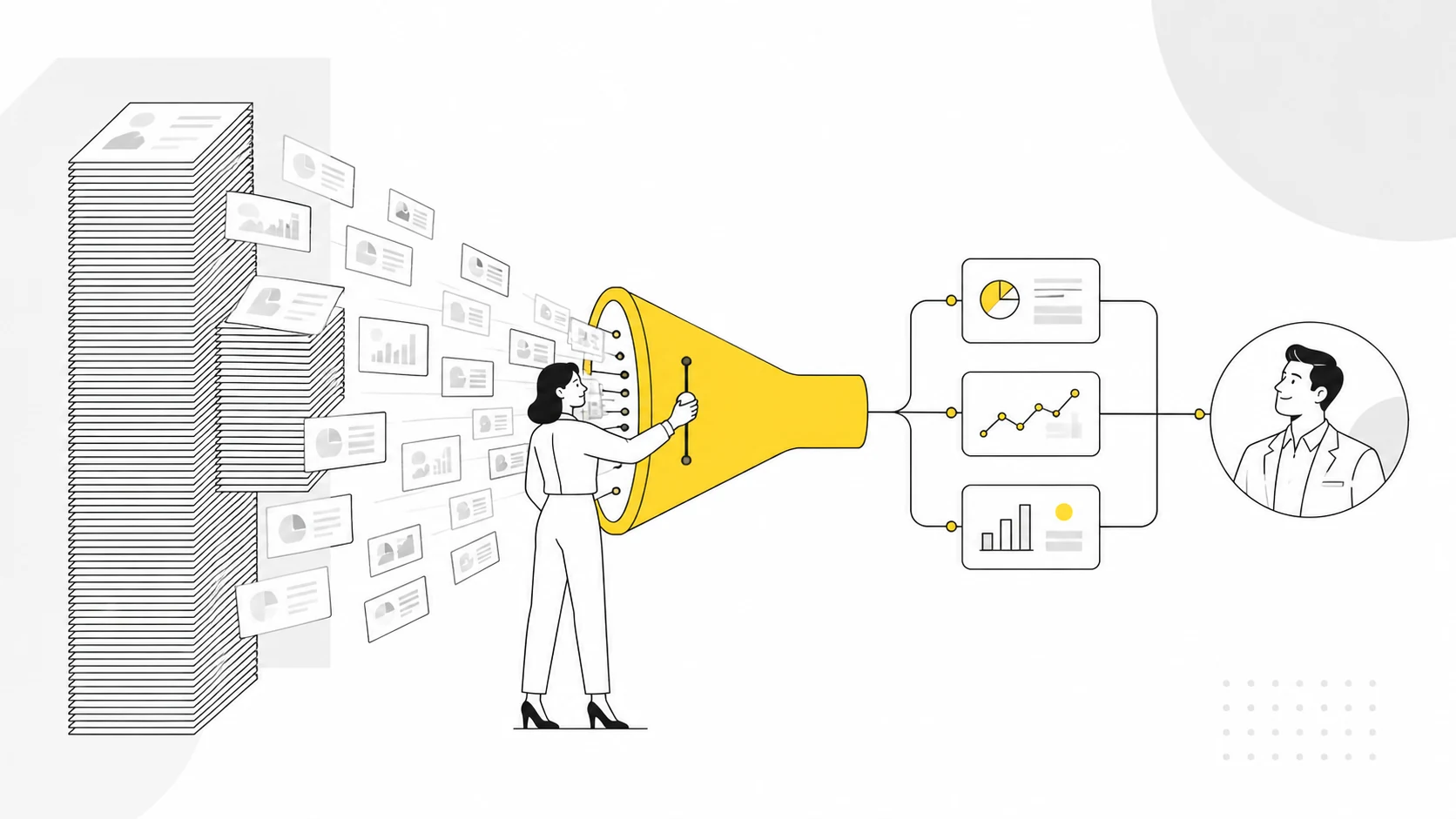
The hundred-slide corporate deck is not your enemy, on the contrary, it is your raw material. The job is to reduce it to three or four slides that talk about the customer and to the customer. Think how nice it is to sit down with the customer, skip the boring slides of the company’s history and tell him: “Look, I’ll save you the history of the life of our organization which you can delve into in these slides and I’ll already tell you that the content you’re interested in is…”.
Don’t be afraid to show the cut while you do it. You scroll through the slides in front of the customer and say look, this is the company’s version, if I tell you all about it it will take me half an hour, but from what you told me what interests you is this, let’s talk about this.
It seems little but you are saying a lot: I have a presentation because I am structured, I listened to you, and I will spare you the history of my organization to find a solution to your problem. As Massimiliano says, you need slide 24 because that’s where you have your pain point. This alone reduces the distance a lot.
4. Customer stories
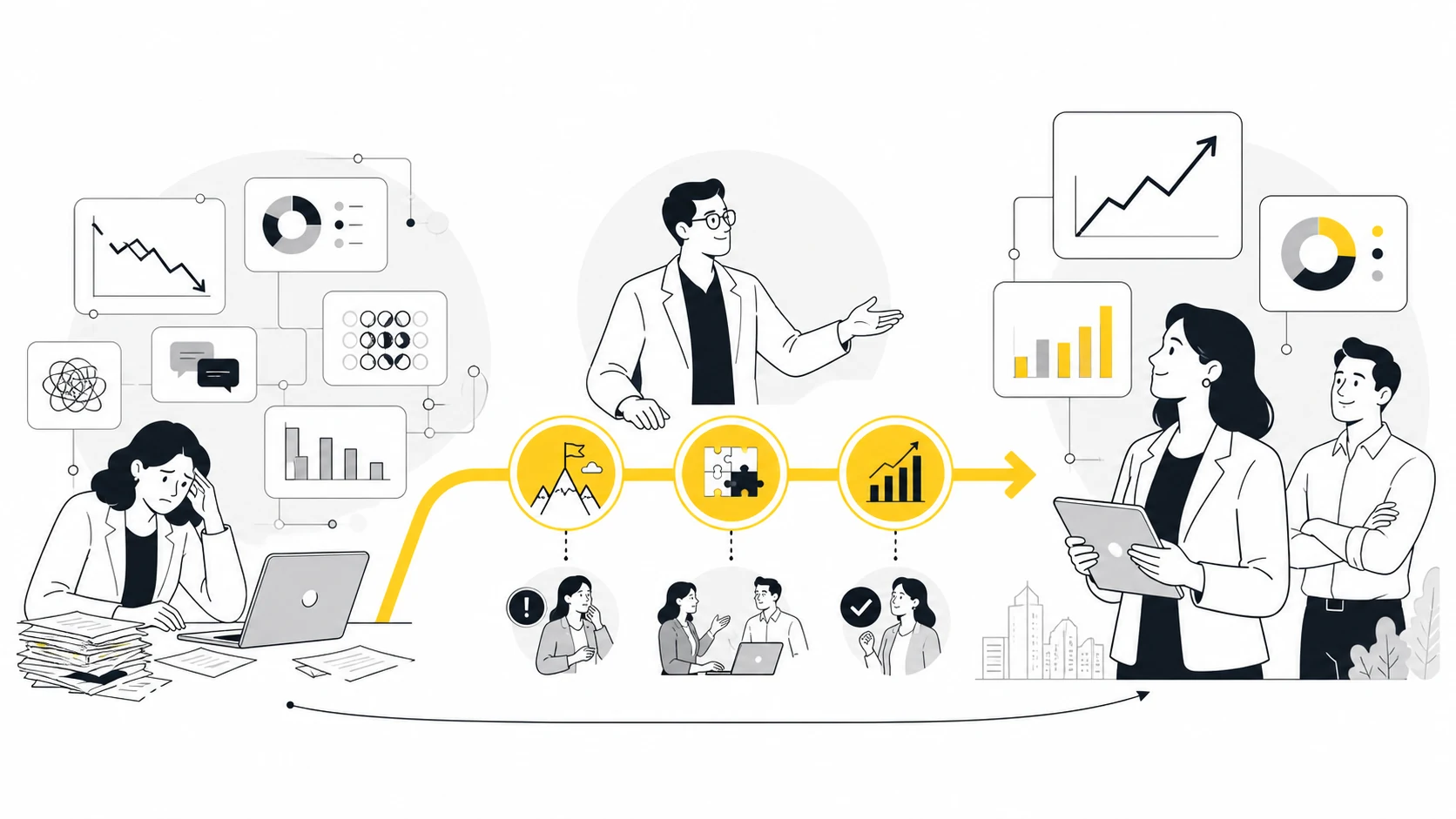
A customer story does not describe what you have done: it makes the transformation credible by showing the result obtained by a similar customer. The minimal structure is problem, intervention and measurable result. For concrete examples, see MLC success stories, including the storytelling and AI project for SMEs and work on strategic communication with BearingPoint.
5. Close on the conversation, not the slide
The flow does not end with the last slide. It ends with the next question. And if you’ve done the first four steps well, the customer will ask you that question.
How many slides do you really need? Andrea, who has seen hundreds of commercial decks, responds like this: maybe sometimes one is enough. This is not a provocation about brevity. It’s a statement about density.
I insist by saying that in many sales calls, despite my job and the reason I am known on the market, I am the first to not use slides.
Then of course, the slides help and help a lot. But they must never replace you, they must complete you and then slides become a powerful means of making your message memorable. This is fundamental especially in situations where, in complex organizational environments, you are not presenting to the final decision maker but to people reporting to them, who will relay the message as best they can.
5. The case study: the slide I rewrote, and which has become our standard
I’ll tell you a concrete case, because it’s the quickest way to understand what it means to show the transformation instead of listing the contents.
Many years ago, when I presented the Lean Presentation Design course, I always got the same question: what is the course program? Legitimate question. And I had my slide ready.
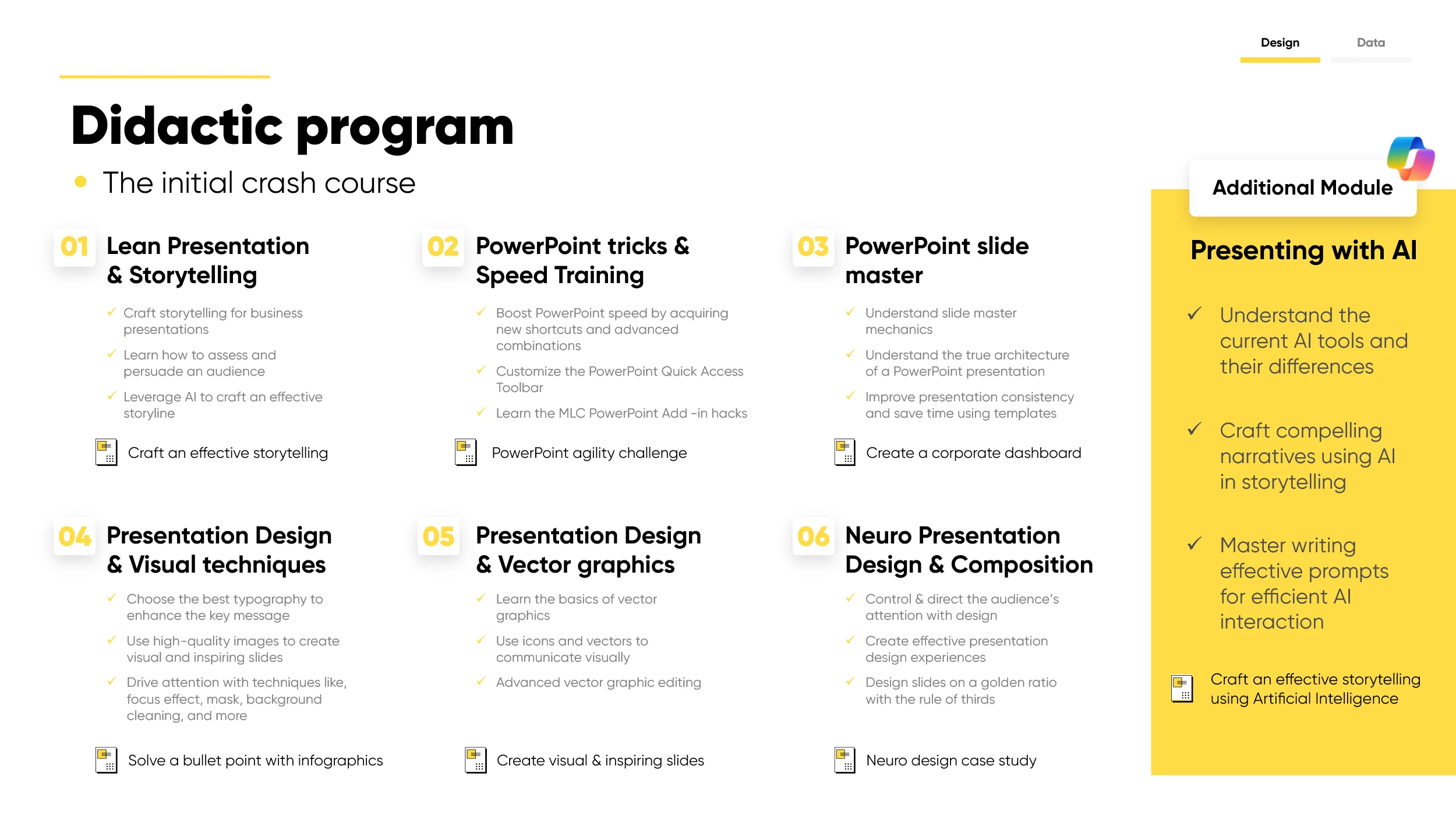
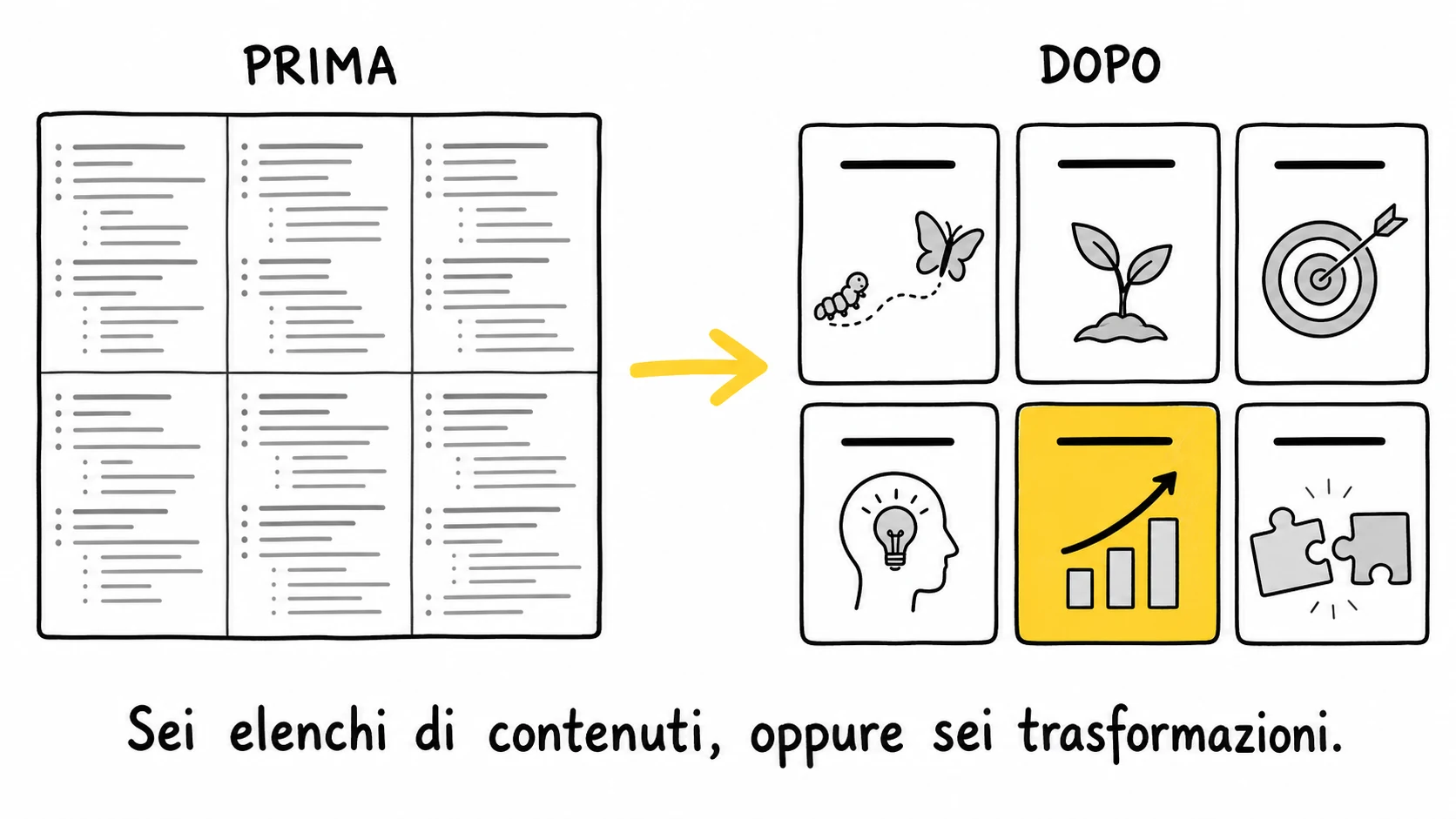
The wrong version. A three-by-two grid. Six small bulleted lists, one per module, with the detail of each chapter inside. I thought it was useful to show the details.
It didn’t work. I talked through it and watched people get lost. They didn’t understand, they couldn’t follow, they didn’t know where we were anymore.
The reason is simple and applies to any presentation. When we show text in a presentation, people are reading. And if they’re reading, they’re not listening to us.
Working memory is limited: when a slide forces you to read a lot of text, it competes with the voice of the presenter. In Neuro Presentation Design I explain how to design attention, understanding and memory. The practical effect, here, is simple: that grid was working against me.
I redid the presentation with one slide per module. On each slide the title and an image. That image did not represent the content of the module. It represented the transformation you took home at the end of that module.
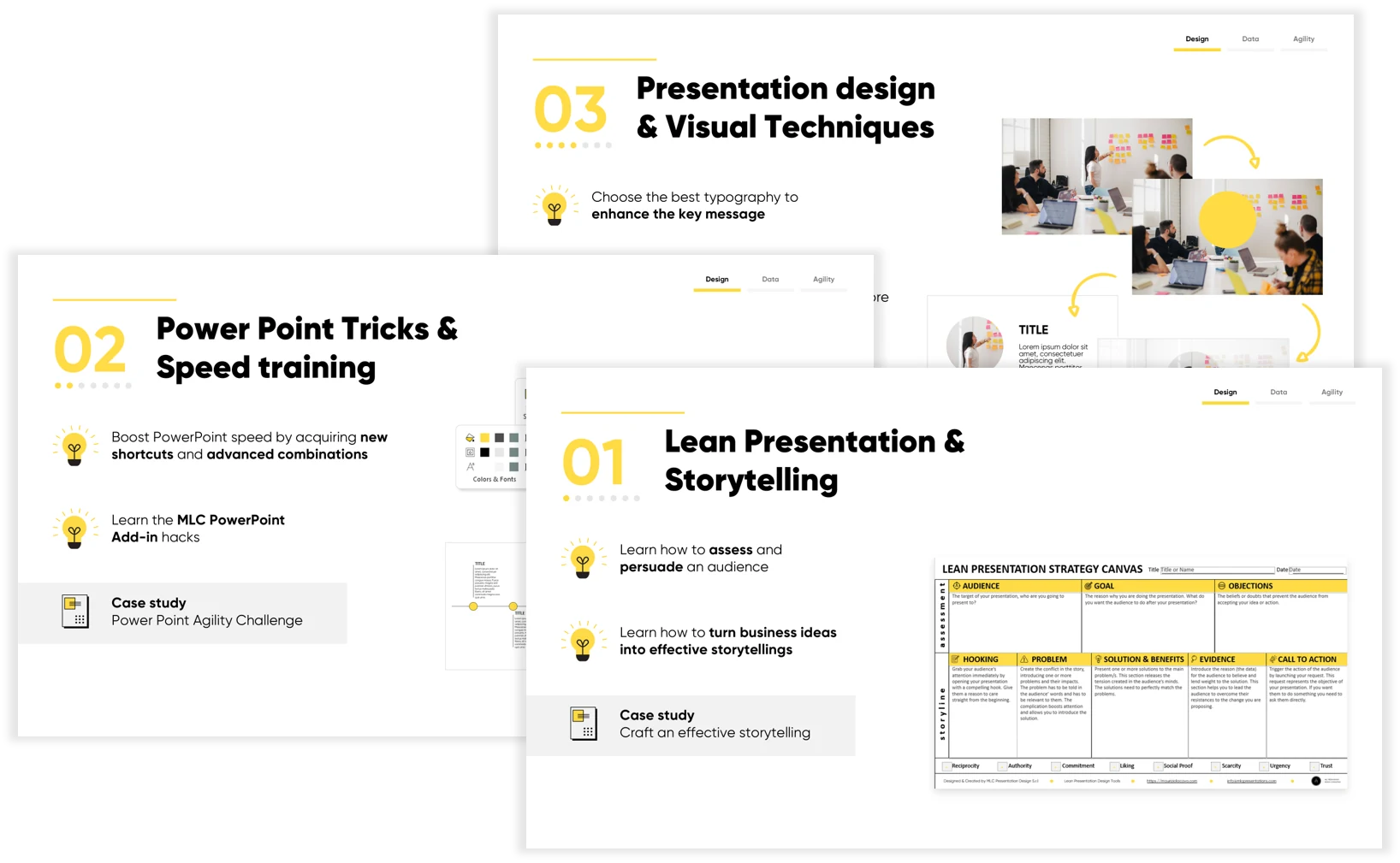
In the storytelling module you saw the Presentation Strategy Canvas, and how from that framework a sequence of slides is born that becomes a narrative. In the module on Presentation Agility you saw PowerPoint tools highlighted to help you work faster. Each image showed a concrete result of the journey.
At the end of the six modules you didn’t see six lists of topics. You saw six transformations that you could take home. That is, exactly that delta that Massimiliano was talking about.
The result? That presentation started working much better. And it has become the standard and best practice for all the other presentations we use, for other courses and beyond.
It’s not always easy. There are contexts where transformation is more difficult to show, and it is a real level of complexity. But it is precisely there that the presentation becomes a precious ally, because it is the tool that allows you to visualize it.
Then, today, with artificial intelligence, with the right prompt, and a few iterations, we can give life to creative ideas that were once unthinkable. So, there are no excuses, presentations are increasingly a powerful ally for visualization.
Take the slide with which you present your offer and look at it for just a second. If what you’re left with is a list, you’ve got my old grid. If what you’re left with is a new customer condition, you’re there.
6. Customer stories: the most important part
Andrea starts from a strong position: in B2B customer stories, which some call references, are the most important thing you have.
You could take the marketing program that costs three, four, five percent of turnover, sometimes seven, draw a line over it and say: forget everything else. Building the brand was useful. But here we are in B2B, we do business one by one. So the only thing we will do, but we will do it really well, are customer stories.
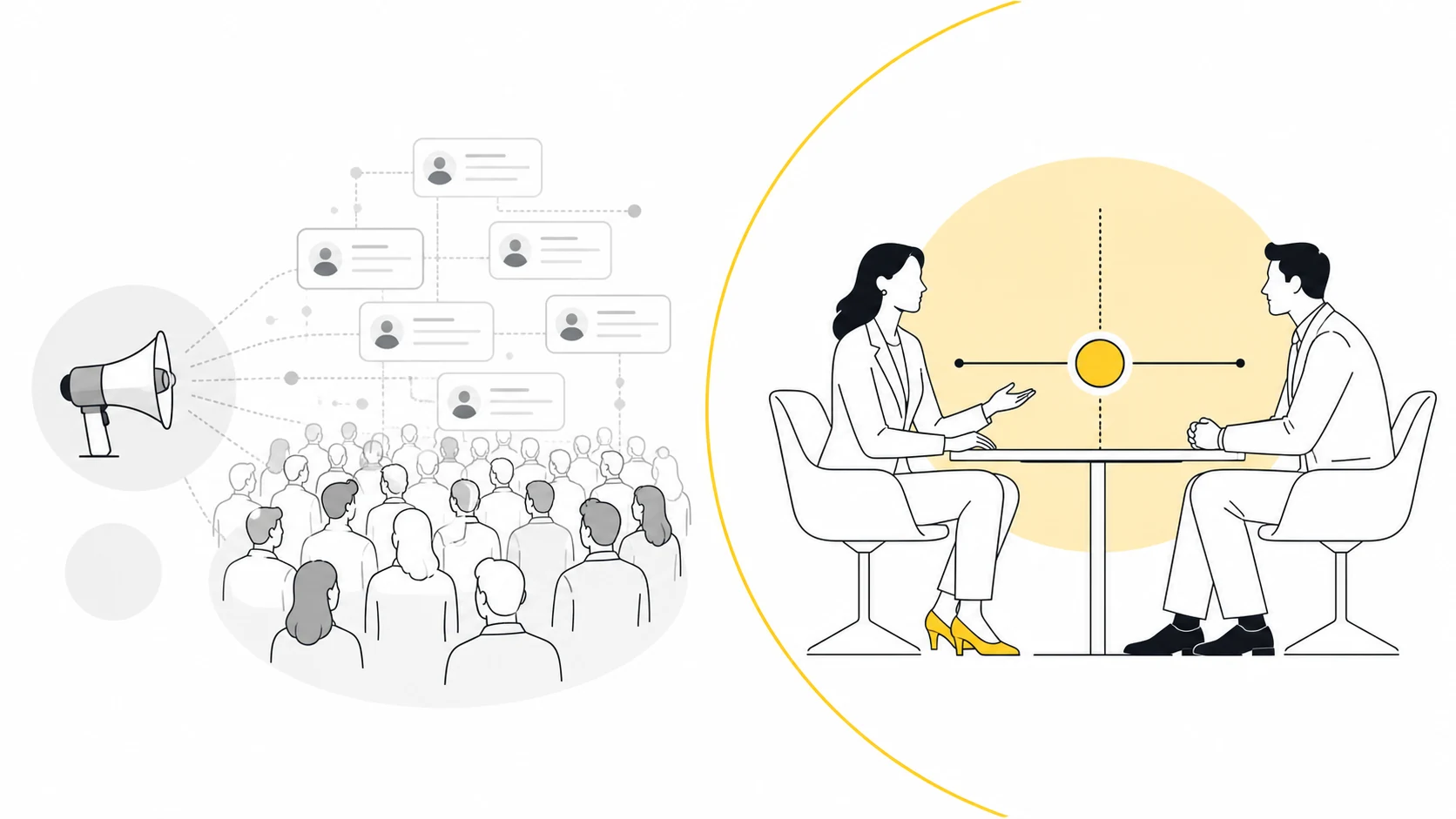
Provocation, of course, and he is the first to define it as such. But the underlying point stands. In high-ticket B2B the decision is built one relationship at a time, and the customer story is the only marketing asset that works within that relationship rather than alongside it.
Let’s stop thinking of B2B as an agreement between companies because the deal closes with a handshake between people.
Take your success stories and see how much they talk about what you did, and how much they talk about what the client got from your work.
The first type sounds like this: we ran the campaign, we created two thousand creatives, we provided a certain number of hours of training, we were very good. The second goes like this: thanks to our work the launch of this product sold twelve percent more.
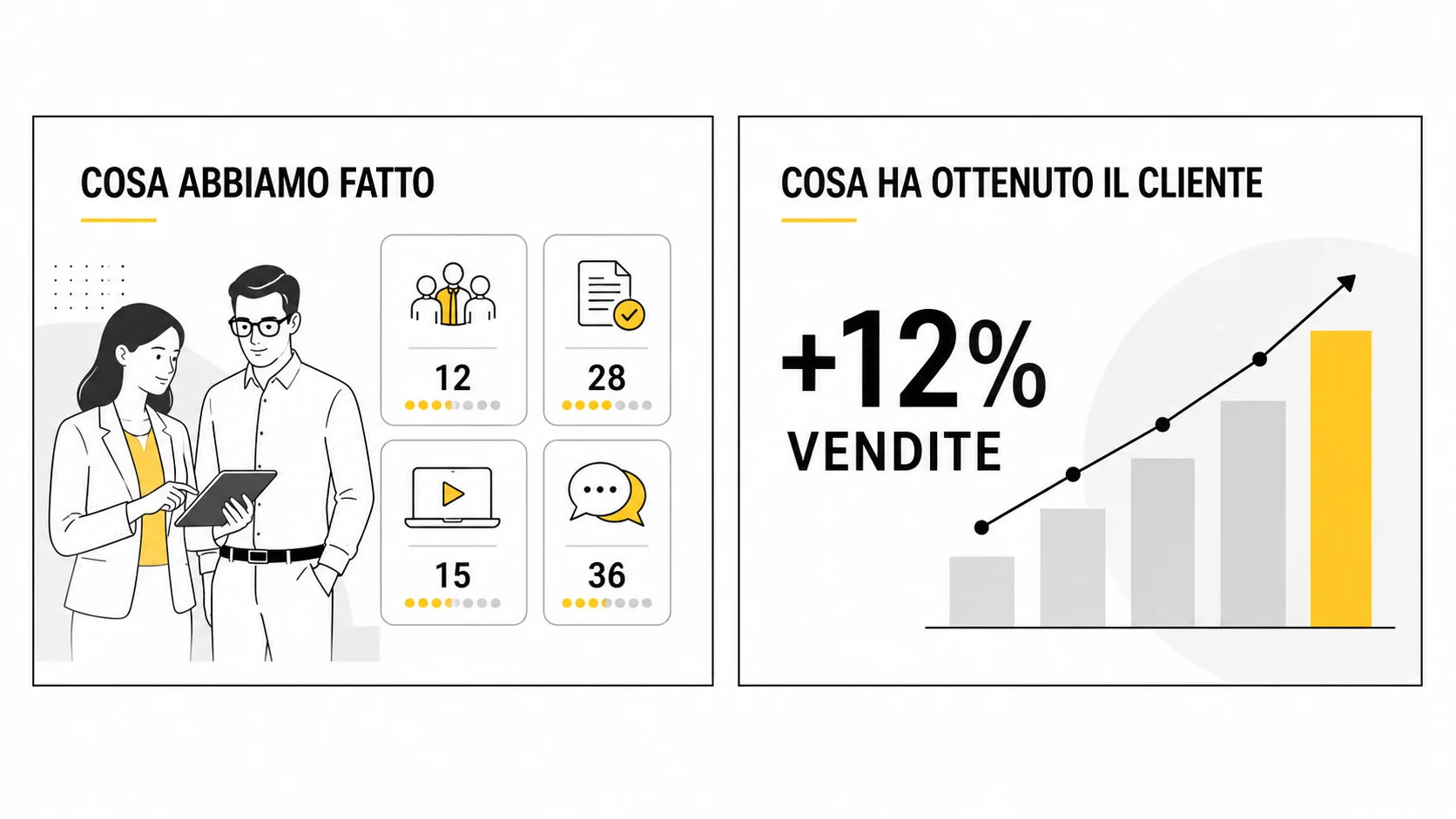
How many hours you delivered and how many courses you ran may sound impressive, says Massimiliano, but it is not what gives depth to a customer story. And he is convinced that a very high percentage of the customer stories found in the decks created by marketing fall into the first category.
Run the same check. Open your sales deck, find the success stories and read the first sentence of each one. If the subject is you, you are in the first category and it won’t work.
How to build a customer story that holds up
- Quantify. You need a clear KPI. Usually it is to increase revenue, reduce costs, save time, or make a certain action more effective.
- Go ask customers. Not just internally, which is fine and done. To customers. Why were you happy with the outcome? Or, just as valuable, why were you disappointed? Hearing ‘I wanted this result and it did not happen’ tells you exactly which problem remains unsolved.
- Build similarity. I went to a client who looks like you, who has problems similar to yours, who presented me with a scenario similar to yours. Here are the results. Put that way, Andrea says, you’ve already done three-quarters of the work towards the next appointment.
- Tell, don’t list. A story is easier to repeat, remember and convey than a list of delivered activities. We will soon see why this is crucial.
The least expensive and most ignored measure: the one to five star satisfaction questionnaire is not customer story material. We need a real conversation with the customer. It’s a long process, not difficult, and produces much more solid results.
7. Design for the room you won’t be in
There is a level of complexity that changes everything in B2B, which I mentioned before: your message is often intermediated. When you present, you are rarely speaking to the final decision-maker.
I’ll give you a very recent example of mine. I have a sales call coming up with a top executive. That call came through five intermediaries, all five in agreement, all five in support of the project. And all five, in confidence, told me the same thing: look Mauri, in transferring your message we made some mistakes, it didn’t go exactly as you described it.
Then they prepared me for the call, with great detail and a touch of doom-and-gloom. This person will not listen to you. He will ask you this. Another vendor was eliminated after thirty seconds. Prepare the slides like this.
And this is where the paradox opens up. They tell me to come and get straight to the point with my solution. But if I do, I’m relying on an understanding of the need that isn’t mine, and which by their own admission has already warped along the chain. It’s like jumping off a cliff without looking.
When it comes to who really decides, there will necessarily have to be a moment of conversation. But in the meantime the message has gone through several stages. And the question becomes only one: what can I get through all these steps?
The intermediaries are in good faith and really want to get the message across. It’s just not easy. People take home no more than ten percent of a presentation. And that ten percent is repeated to someone else perhaps in a taxi, going to catch a plane.
This is why the customer story wins. Not because it is more attractive. Because it’s easier to talk about, remember and convey than a list of activities. Compare the two versions that reach the decision maker.
- They did a course, then a workshop, then I don’t remember well, maybe I’m confusing it with another supplier.
- They took that customer, who by the way is in the same industry as us and we know him well, and managed to achieve this result. Wait, let’s talk, let’s get into it.
The second survives the journey. The first does not.
I close with a phrase taken from an old sales training, which summarizes all the preparation work: the best way to empathize with the customer is to show customers that you are qualified to solve their problem by articulating it better than they could.
8. AI in sales presentations: co-pilot, not autopilot
Massimiliano has posed the problem in the most precise way I have heard. Building a presentation that at first glance seems well done is much easier today than five years ago, and this is an advantage. But there is a hidden price.
If we overuse AI and tools like it, we are simply shifting the effort from us, the creators of the presentation, to the audience.
That is: I made the presentation, look how beautiful it is, it has all the right colours. It is now the customer’s problem to find something useful in it. The operational conclusion is that the effort and responsibility remain with those who construct and present the presentation. If I save four hours of block alignment, great. But the person who governs communication must be the one who communicates.
I took the term I brought into the conversation from some Harvard Business Review articles: workslop. Work that looks good but is not.
I wrote the long version of the workslop applied to presentations on The Less is More Newsletter, my newsletter on LinkedIn. There the reasoning is developed in full.
It’s the classic presentation made with AI: you load the slides, add instructions on your corporate visual identity and you get an apparently ready deck. It may be beautiful, but meaningless. Reading it you find copywriting tricks that go around the point without hitting it: they seem right, but they are not precise enough.
The metaphor is that of a guided journey.
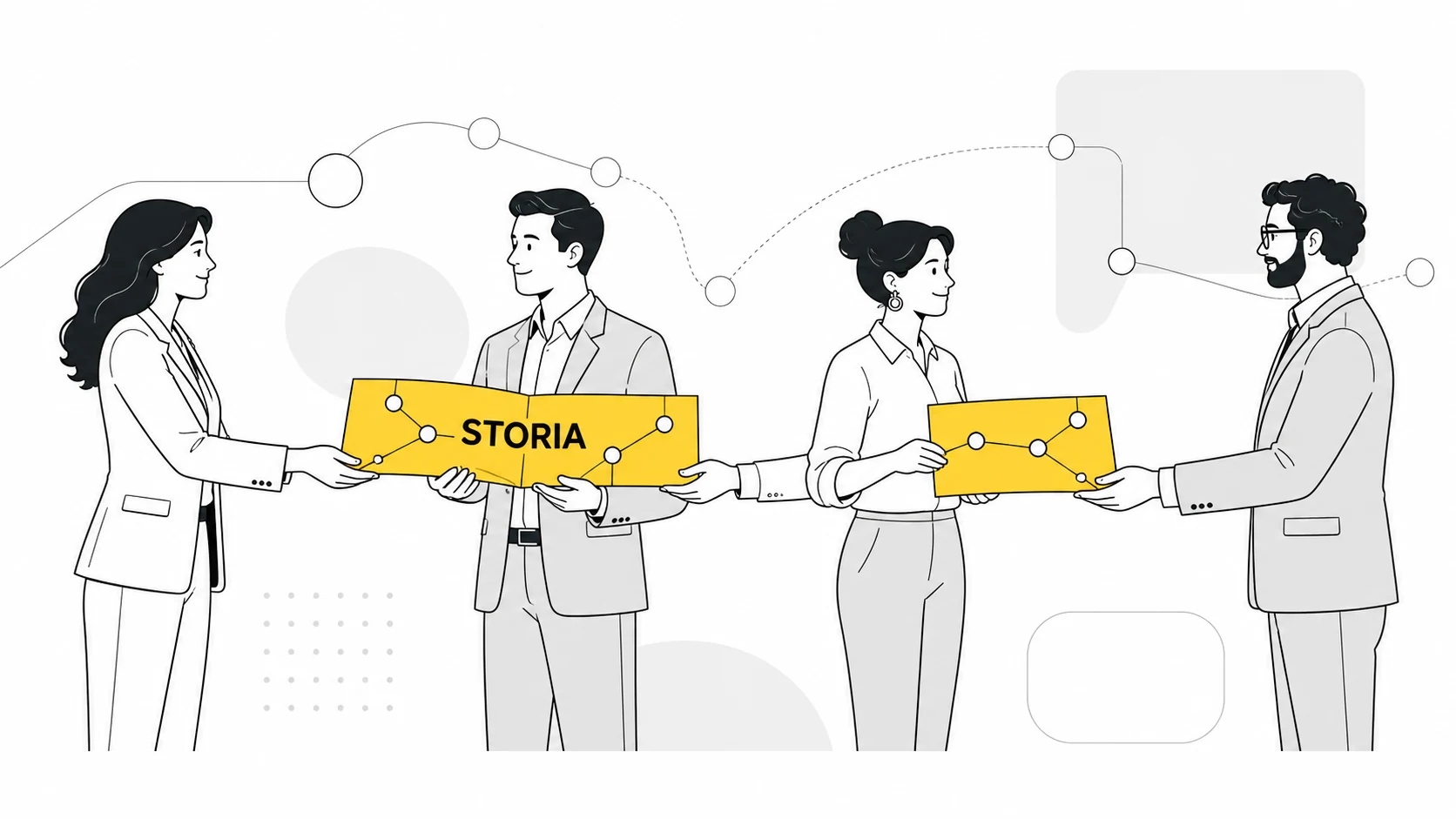
A presentation, in the end, what is it? It’s like taking our audience by the hand and leading them on a journey through a thick forest that they couldn’t get through alone. I take them from A to B, where they can make a decision that was impossible before because the path was not visible.
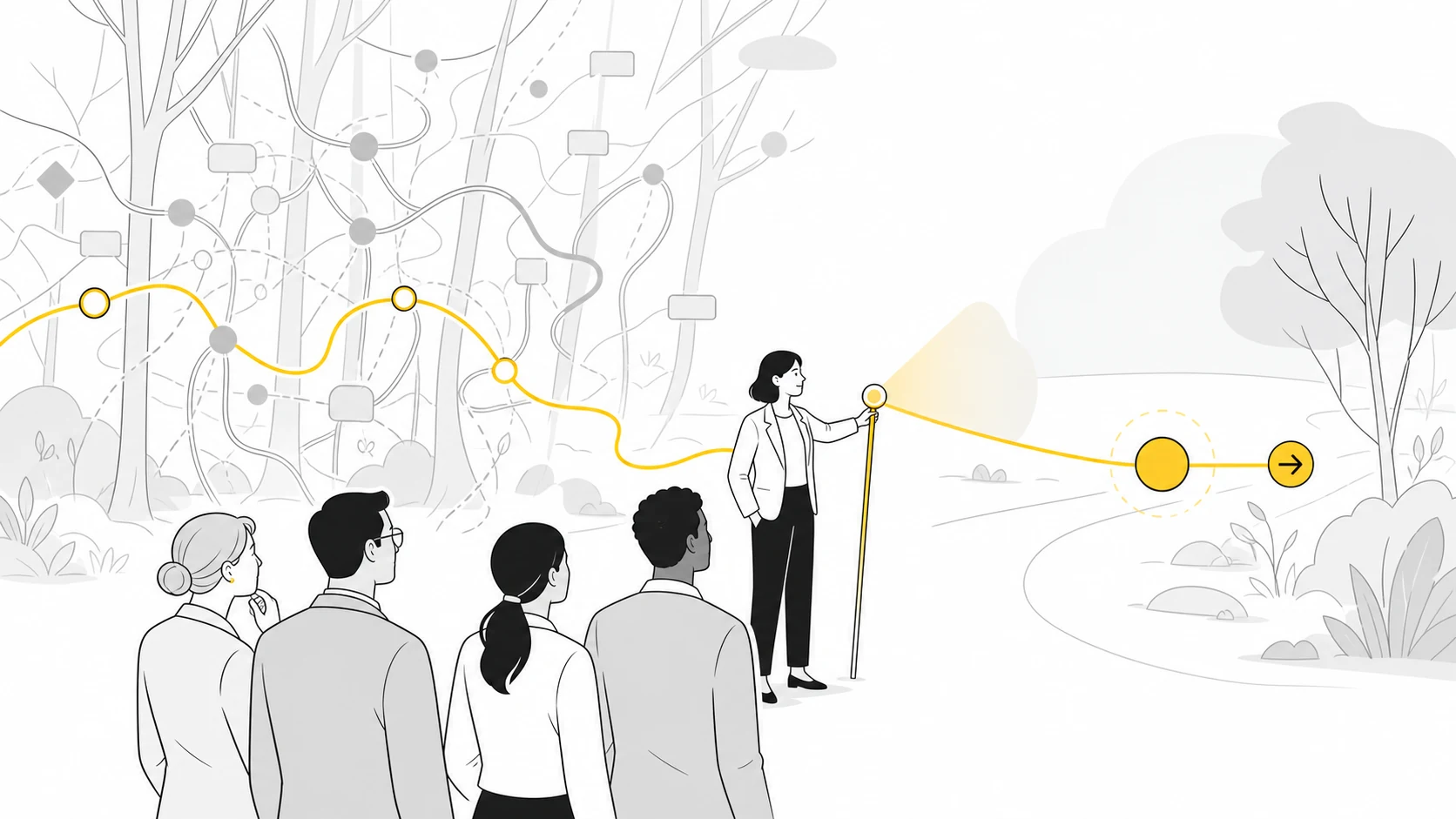
If the presentation was made by the AI, you are not leading anyone. You’re sending people on a journey that you’ve never experienced. It is like describing a beautiful trip you know nothing about.
Combining hands-on work and human judgment with AI is another matter. Perhaps Microsoft got us right with the word co-pilot: it is much more useful to think of it as a co-pilot than as an autopilot.
Conclusions
The central idea of this article is not technological.
In B2B we talk about companies, but there are people in that room. The sales presentation is not the script of that meeting, it is the tool that reduces the space between you and whoever is in front of you. If it reduces it, it works for you. If it increases it it works against you. A third option does not exist.
Therefore: prepare around the person before the product, use the slides to ask questions instead of giving answers, show the transformation instead of listing the activities, build customer stories that talk about the customer’s results and not your merits, design thinking about the room you won’t be in. AI helps you do it faster. It cannot do it for you, because you must have made the journey.
We reduce the distance from any point of view, human, professional, cognitive, content-related. We make it easy for our interlocutor to understand and decide. Anything that makes it easy to understand and decide helps the sales process. On the contrary, everything that raises barriers is rowing in the opposite direction.
The checklist before the next sales meeting
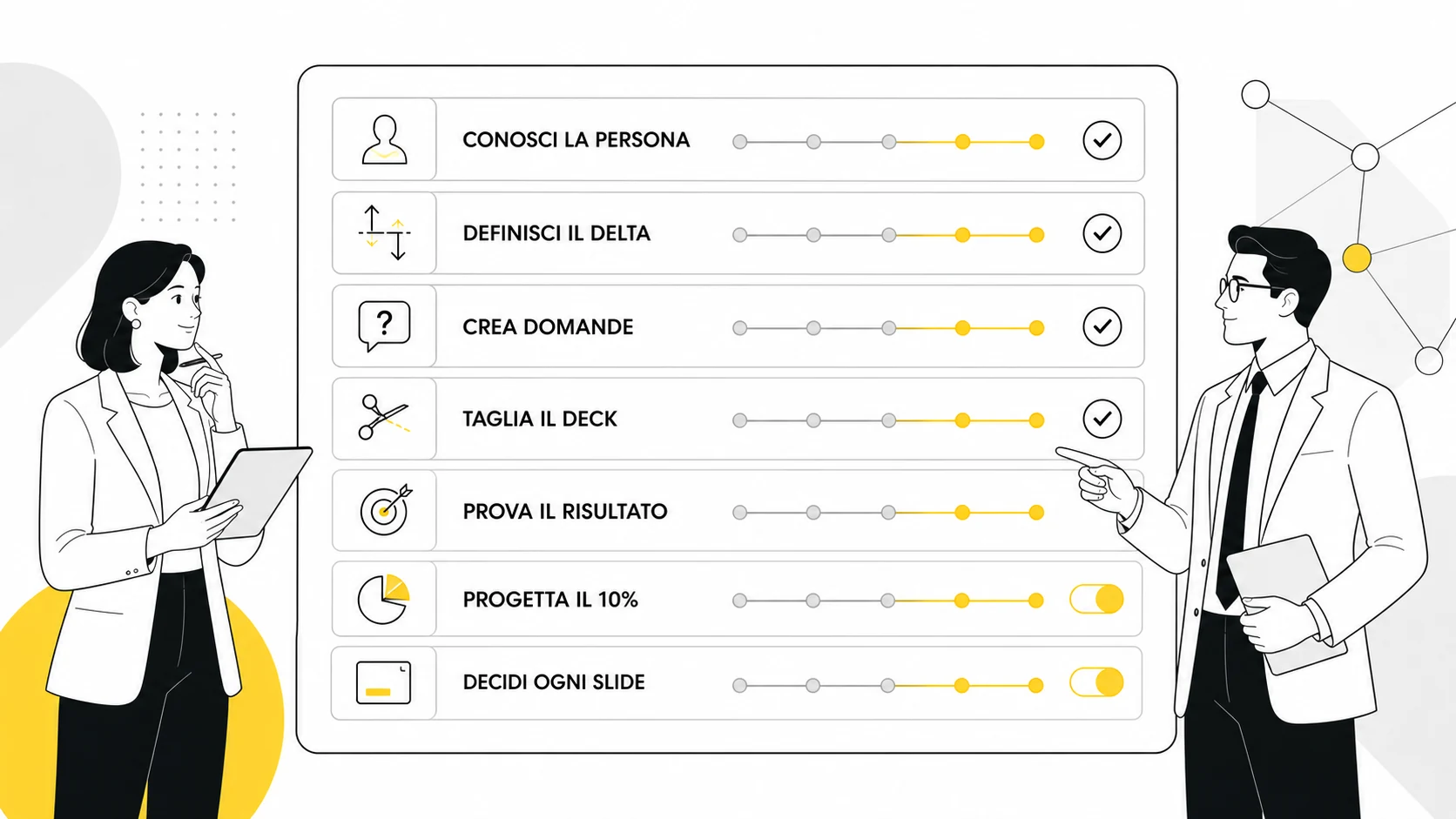
- I can say at least one specific, non-obvious thing about the person I will meet, not about their company.
- I know what the delta is: where the customer is today and where they might be.
- I have at least one slide that serves to make me ask questions, not to give answers.
- I cut the inherited deck, and I know which three or four slides this person needs.
- My customer story is about what the customer got, with a number, and not how many hours it took me.
- I know what phrase I want to survive when my message is repeated without me.
- I looked at, chose and decided on every slide I show.
If two or three of these items give you trouble, that’s no problem. It’s a great starting point.
Frequently asked questions
What is an effective sales presentation?
It is a presentation that reduces the distance between the seller and the listener, rather than increasing it. It doesn’t serve to tell the story of the company: it serves to make it easy for the customer to understand their problem and decide. If after your presentation deciding is more complicated than before, the presentation has worked against you.
How many slides do you need in a sales presentation?
Less than you have. In the corporate deck there are often a hundred of them, but those that serve a specific client are usually three or four. For a customer story, sometimes one is enough. The right question is not how many slides, but which slides this person needs at this moment.
How do you structure a B2B sales presentation?
In five movements: show the delta between where the customer is today and where they could be, use slides that bring out questions instead of statements, cut the inherited deck by choosing only what that person needs, bring a quantified customer story on a similar case, and close on the next conversation instead of on the last slide.
Is it really necessary to use slides in a sales call?
Not always. It often happens that you open and close a commercial conversation without presenting a single slide, and still get the result. The slides must be kept ready and used when they serve to structure and make a solution credible, after listening and never instead of listening.
What does it mean to show the transformation to the customer?
It means you stop listing what your offer contains and start showing the situation the customer will be in afterwards. Not the six modules of a course, but the six transformations you take home at the end. Not the activities performed for a client, but the result they achieved thanks to those activities.
How do you write a customer story that works?
It must talk about what the customer achieved, not what you did, and it must have a clear KPI: increasing revenue, decreasing costs, time saved. It must build an explicit similarity with the prospect in front of you. And it must come from a real conversation with the customer, not from a satisfaction questionnaire of one to five stars.
Why in B2B does the message distort before reaching the decision maker?
Because you almost never present to those who decide. You present to someone who will repeat your message to someone else, perhaps in a taxi, and people retain no more than ten percent of a presentation. This is why we need to design that ten percent so that it is easy to remember and repeat, and this is why a story survives where a list of activities is lost.
Can artificial intelligence be used to build a sales presentation?
Yes, upstream. To research the interlocutor, explore angles, test the thesis, draft an initial version of the storyline. Not downstream: if the model generates the final slide, you are shifting the effort from the creator to the audience and you are accompanying the customer on a journey that you have never done. AI is a co-pilot, not an autopilot.
Do you want to improve your business presentations?
Explore the Lean Presentation Design program to transform business presentations into tools that make it easier to understand and decide.



Comments on The Ultimate Guide to an Effective Sales Presentation